The Day Didn’t Go As Planned - Oct 2026
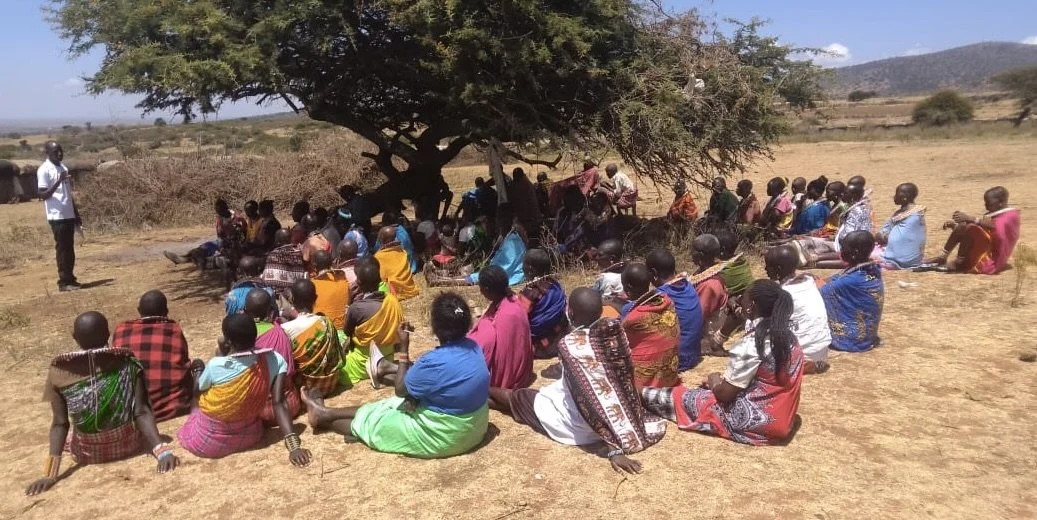
Today reminded me that community work is not always about following a plan. Sometimes it is about patience, sometimes disappointment, sometimes laughter, and sometimes those unexpected moments that remind you why you started this journey in the first place.
Our day started on a good note. We woke up ready for another day in the field, carrying our lessons, our hopes, and our desire to make a difference in the lives of families and communities. Our first stop was Lalaingok village. The community had requested that we start a little later because the animals needed to be taken to the watering points in the morning. Of course, we understood. In our communities, life has its own rhythm, and if you want to work with people, you must first learn to understand their lives.
By 9:30 a.m., we were at the venue, ready and waiting for our people to arrive. It was one of those particularly hot days when you begin wondering whether you came to conduct a community meeting or to experience the full strength of the Samburu sun. We waited patiently. Then we called the community mobiliser. At first, he didn't answer. Eventually, he picked up and assured us that people were on their way. So, we waited. Minutes turned into more minutes, and the sun continued doing what it does best. Again and again, we received an assurance that people were coming, but by 11:30 a.m., we had reached that difficult point where you have to accept that you cannot wait forever. We had another village to visit, and we needed to move.
Moments like these can be discouraging. But one thing I am learning through this work is that you cannot always anticipate how a day unfolds. Just as we were about to move on to our next destination, a woman called us. She had attended our previous meeting in Lorora and had loved the session so much that she wanted us to share the same lessons with other women. She had already invited some women to gather outside her home, and she insisted that we pass by. We had spent the morning waiting for a community meeting that wasn't happening, only for one woman create an opportunity for us to meet people who genuinely wanted to learn.
There was something special about that gathering. It felt personal. It felt real. We were not just standing in front of people delivering information; we were sharing experiences, reflecting on family life, laughing together, and learning from one another. As we discussed communication in marriage, I thought about my own childhood and how poorly my mother and father communicated with each other and decided to share a story about my parents and a very special little goat.
My dad was a staunch Christian, while my mum was a chronic alcoholic who loved fighting and causing trouble at home and sometimes even in the village. In our home, you could never be certain whether a day would end peacefully or turn into another episode. But there is one particular incident I will never forget.
My mum once found a he-goat abandoned in the forest by herders who were travelling long distances. The goat was sick, so they left it behind. My mum took the goat in and cared for it. And when I say she cared for that goat, I mean she REALLY cared for it! She treated it like a child. When grass was scarce, she would even feed it human food. This was no longer just a goat to her. It was her baby, her responsibility, and probably one of the most protected members of our household!
Then came the day my dad decided to give an animal as a tithe to the church. And guess which animal he chose: my mother's beloved he-goat! Now, my mum did not openly tell my dad how she felt about his decision. She didn't say, "Please, that goat means so much to me. Can we choose another one?" She simply asked him, "Where are you taking this?" My dad replied confidently, "To church." And my mum offered to help him take it there.
They arrived at church, and my dad went inside for the service while my mum remained outside babysitting her precious goat. The service went on, and my dad was expected to hand over the goat to the pastor afterwards. But when he came out of the church, something was missing. Actually, two things were missing. My mum and the goat!
My dad looked around, but there was no sign of either of them. He had no choice but to tell the pastor that he would bring the goat the following day. He returned home and there was my mum, peacefully feeding her goat as if she had not just disrupted the entire tithe arrangement! My dad asked her what all that meant. My mum explained that she had waited for God to come and take the goat, but God had not come. She eventually got tired of waiting, so she decided to take her goat home herself! She went on to make her position very clear: the pastor was not going to take her goat! My dad was furious. In the end, he decided to take TWO of her goats to give to the man of God instead.
When I reached this point in the story, the women cracked up. We all laughed and they began relating the story to their own experiences. But beneath all that laughter was a lesson that touched the very heart of our discussion, a lesson about marriage. As funny as the story was, I wanted the women to see something important. My mum loved that goat. My dad wanted to honour his faith by giving a tithe. Both had their own feelings and intentions, but there was very little honest communication between them. My mum did not openly explain why the goat mattered so much to her. My dad did not appear to understand the emotional attachment she had developed to it. And instead of having a conversation that could have helped them reach an understanding, the situation turned into a family drama!
The women at the gathering and I imagined how differently things might have happened if my parents had sat down and talked. My mum could have explained her attachment to the goat. My dad could have discussed his intention to give an animal to the church. They might have agreed to send another goat. But because they did not communicate well, what could have been a simple conversation became a long-remembered family incident. The women could see from this story that silence does not always mean agreement, and keeping quiet about something important can create misunderstandings that could have been avoided. They could see that we must learn how to express ourselves, listen to one another, and make room for each other's feelings. We cannot expect our partners to read our minds.
And this is why I love using real-life stories when teaching. People remember a lesson better when they can laugh about it, recognise themselves in it, and reflect on what they would do differently.
After our story, we continued reflecting on other topics from our previous Lorora meeting. We talked about unequal power relationships and the importance of creating homes where both partners are respected, heard, and involved in decisions that affect their lives. We discussed positive parenting and the responsibility we have as adults to raise children with love, guidance, understanding, and discipline that builds rather than breaks them. We also talked about education for girls, reminding one another that a girl's future should not be limited by the circumstances into which she was born. Educating a girl opens doors not only for her but also for her family and community. And, of course, we returned to communication, exploring how listening, speaking respectfully, and learning to resolve disagreements peacefully can transform relationships.
What made the session especially beautiful to me was that the woman who invited us had attended our previous meeting was so encouraged by what she had learned that she wanted other women to benefit, too. Sometimes when we work in communities, we wonder whether our efforts are making a difference. Then a moment like this happens. One person remembers. One person cares enough to share. One person becomes a bridge between what we teach and what others get to learn. And suddenly, we realise that the work is travelling further than we can see.
Today we experienced kindness, initiative, laughter, and meaningful connection. I am grateful for that. I am also grateful that I could share a little piece of my own family story. Not every memory comes without pain, but sometimes, when we reflect on those experiences honestly, we find lessons that can help someone else. We do not have to pretend that we have lived perfect lives to help others. We can learn from our experiences and use those lessons to encourage healthier choices for the next generation.
As we continue this work through Ramat Empowerment Initiative, I hope we can continue to create spaces where people learn without shame, speak without fear, laugh together, and reflect honestly on the changes they want to make in their families— because behind every family is a story, behind every story is an opportunity to learn, and behind every small step is the possibility of lasting change. 💜