Alternative Rite of Passage Ceremony
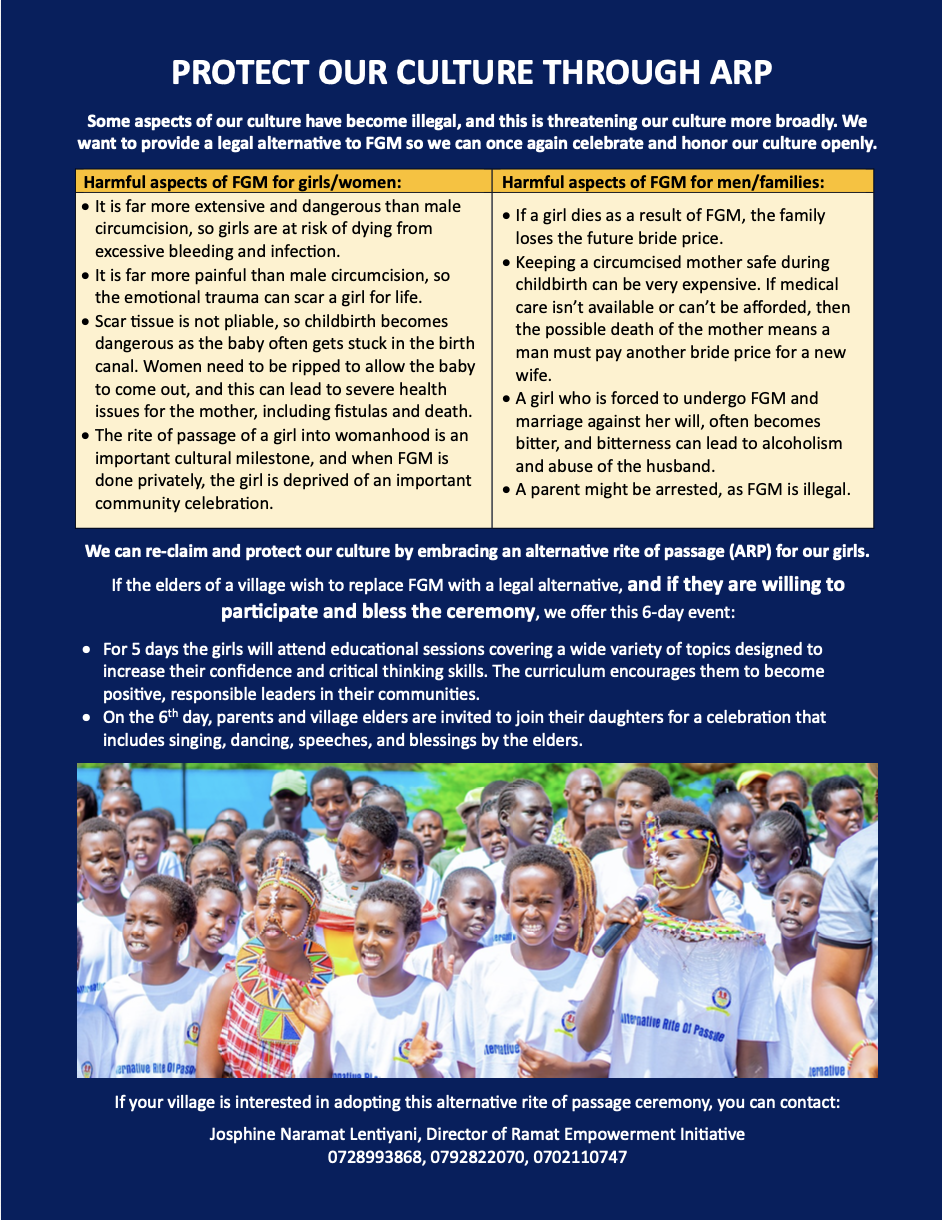
In 2025 we began village visits 3 times per year to build relationships with elders and discuss issues affecting villagers’ lives. We wanted to bring aspects of our empowerment club curriculum to villages, because, while participating children are impacted by the clubs, the children struggle with resistance in their home villages. Villagers have loved the chance to openly discuss issues they care about, and they keep encouraging Josphine to return. She treats complaints from the men with as much respect as those from the women. For example, it is the men who complain about domestic abuse, not the women. Young girls forced to marry elderly men become bitter, and, being young and strong, they are a greater danger to the elderly men than the other way round! When equal attention is given to problems bothering the men, the male elders are more open to responding to concerns from the women as well.
On our second set of visits, Josphine brought up FGM. The ritual is illegal in Kenya, but the laws are rarely enforced in rural areas. According to the Anti-FGM Board Kenya, prevalence of FGM had dropped to about 76% across Samburu County by 2022, but most of the decline was in urban areas. The rate is much higher in the traditional rural areas of the county, though accurate estimates are hard to obtain since no one admits to the illegal practice. Many groups have tried to dissuade villagers from the practice, even threatening them with arrest, but that has only served to create greater resistance. Elders don’t like “outsiders”, even if they are Samburu, telling them what to do. They especially don’t like anyone challenging their traditional culture.
When Josphine brought the subject up, villagers immediately became hostile and angrily told Josphine if she wanted to talk about FGM then she should just leave. She gently explained that she wasn’t there to tell them what to do. They hadn’t been to school, but they worked hard and sacrificed to send her to school (figuratively) and she was just there to share what she had learned. What they decided to do with the knowledge was up to them. That calmed them down and they listened. What happened next was amazing!
As Josphine shared the details of FGM, including risks of the procedure itself and subsequent risks during childbirth, the men were shocked. It is a taboo subject, so men didn’t know! They kept turning to the women asking, “Is this true? Are the things she’s saying true?” The women confirmed what Josphine was saying, and pretty soon an argument broke out–the men angrily told the women they were to blame for FGM because no one had shared with the men what FGM actually entailed; the women in turn blamed the men since women were just obeying their husbands’ orders. Josphine observed the heated discussion quietly, giggling to herself. In the end, the ELDERS REQUESTED that Josphine come up with an Alternative Rite-of-Passage Ceremony (ARP) for their daughters!!!
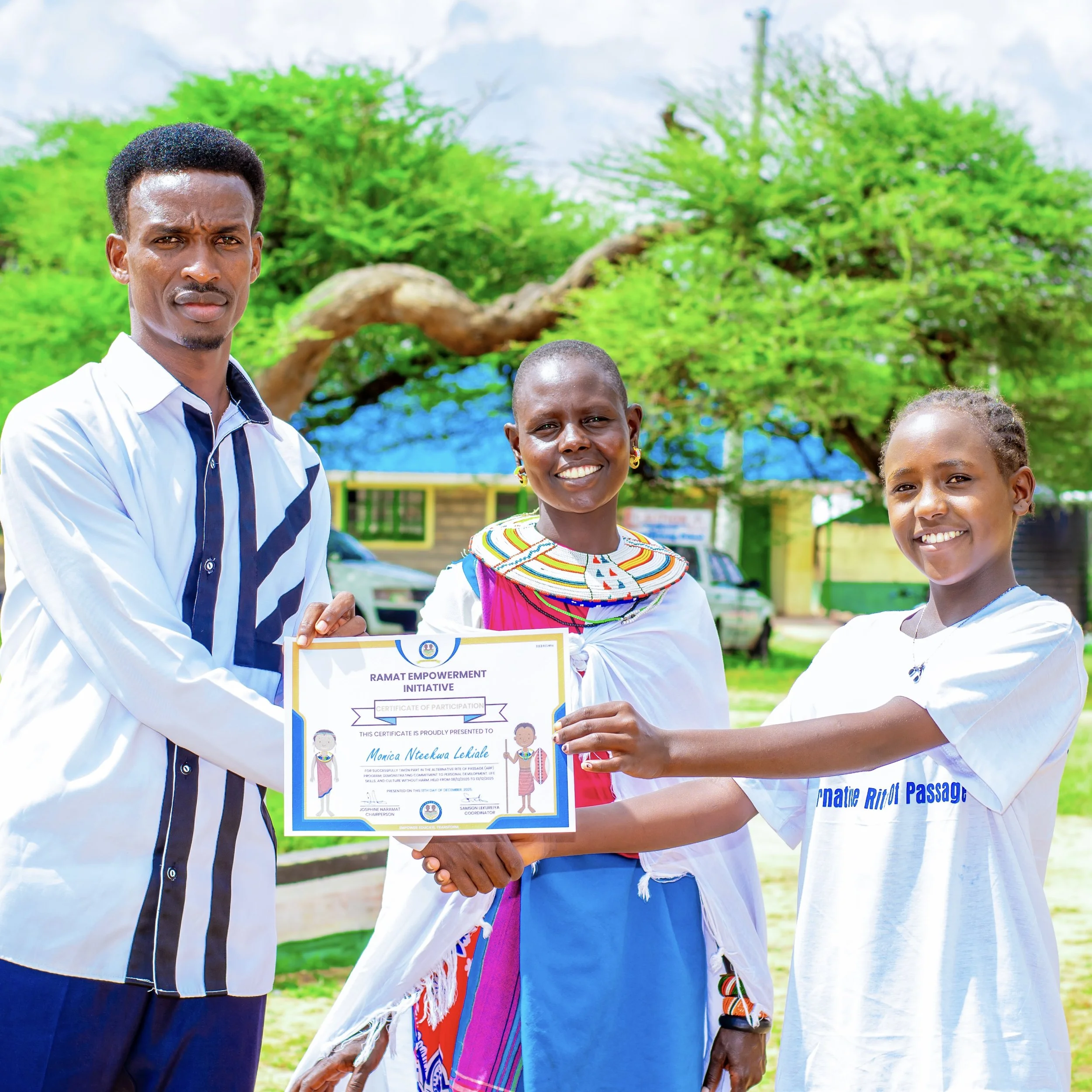
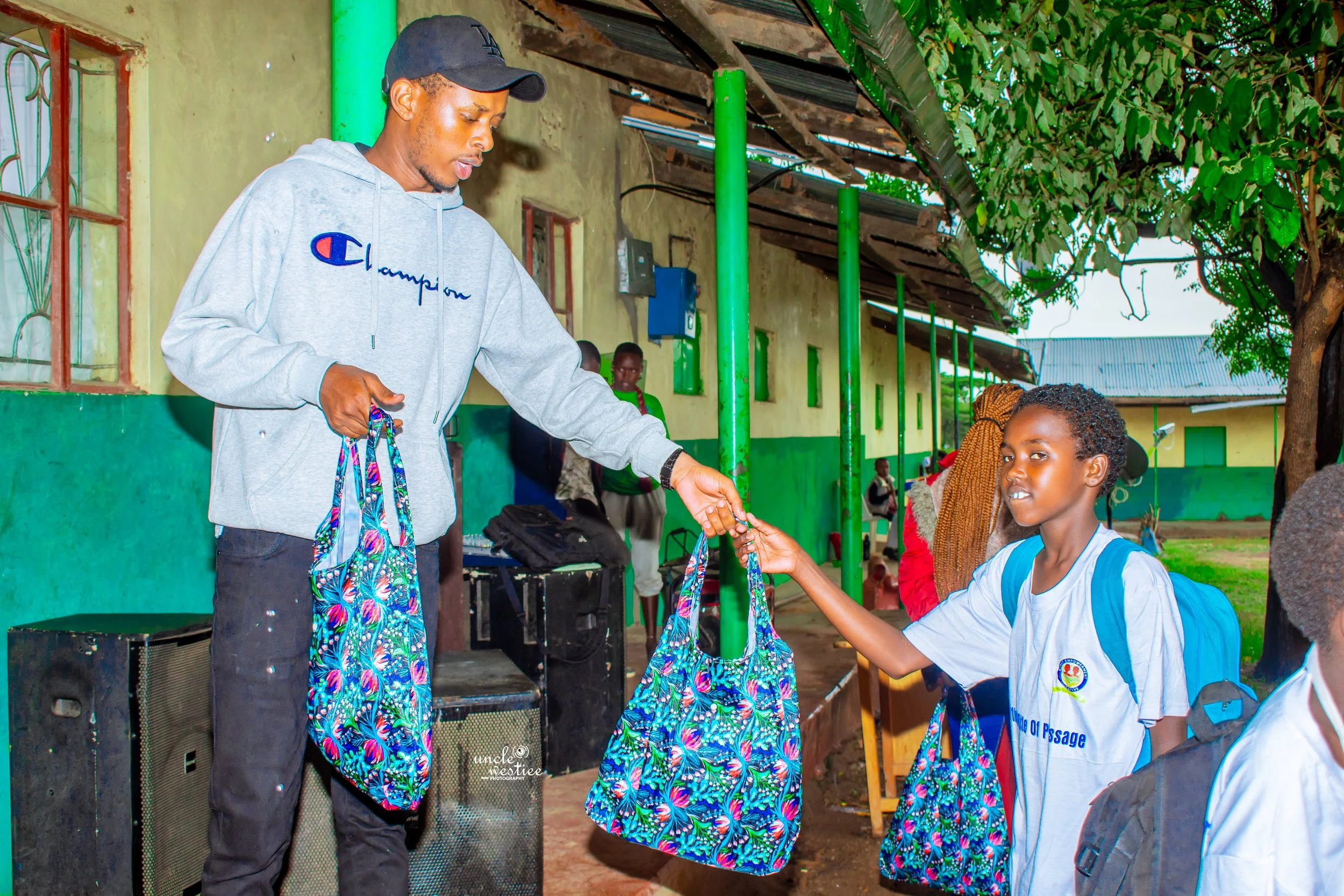
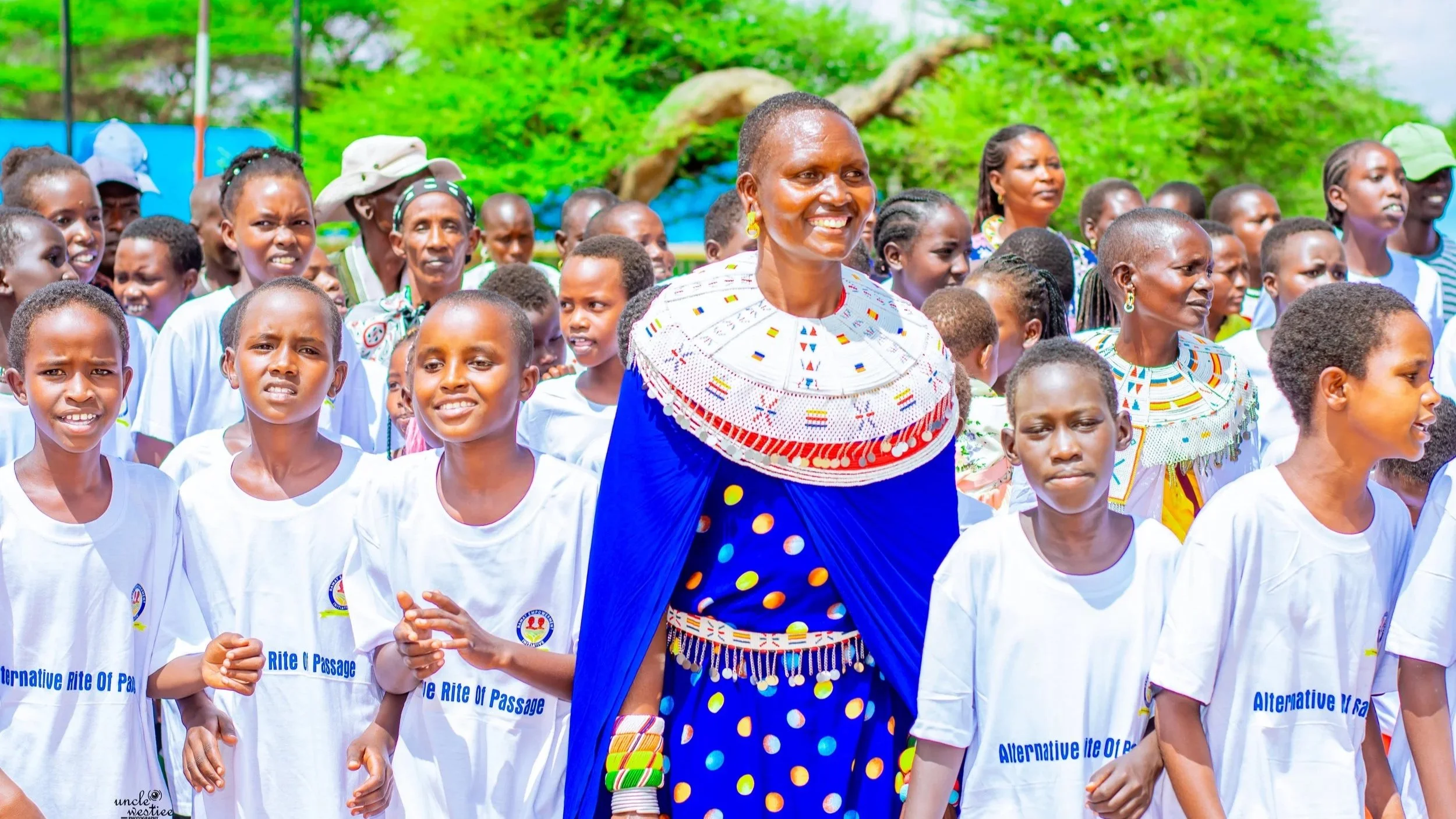
We happily obliged, and in December 2025, Ramat Empowerment Initiative offered our first ARP to 104 girls. The girls experienced 5 days of teachings based on our Empowerment Club curriculum, and on the 6th day, parents and elders were invited for a celebration that included dancing, speeches, a feast, and blessings by the elders. The only complaint? They had far more than 104 girls ready for FGM, so they want us to offer more alternative ceremonies (which we are happily planning to do)!

After the first two ARPs, we assembled the elders to hear their feedback and we were greatly encouraged. Many shared that the girls who attended the ARP returned home noticeably different. They were more disciplined, respectful, and confident. They communicated more openly with their families and demonstrated a new sense of self-worth. One elder shared that after returning home, the girls were no longer afraid to express themselves. They spoke confidently about issues that had previously been considered too sensitive to discuss, including female genital mutilation (FGM). For the elder, this was more than knowledge—it was evidence that the girls had found their voices. What was particularly heartening was that elders from FIFTEEN villages were present – not just the ten villages we worked with. Elders from five additional villages were there to petition the expansion of the program to their girls as well!
If you are wondering if this is truly working to stem FGM in the Wamba are, in June we were presented with the most convincing proof ever! The women who conduct FGM on young girls are known as “cutters”, and a group of cutters in the Wamba area got together to complain because they have lost their primary source of income - they were pleading with the government for economic help. A Samburu news agency picked up the story and posted it. What more perfect way to demonstrate the success of our efforts to end FGM in Wamba than to hear local cutters complain about the injustice of their lost income!!?? (In case you are feeling bad for these women, keep in mind these women torture and sometimes kill children for a living – they are not warm, grandmotherly types! But African communities take care of one another – it is a deep-seated part of the culture. The community will help care for the women.)
Our work is growing quickly. In the summer of 2026, the Lmasula clan (representing about 24% of Samburu) gathered hundreds of households from remote villages into 7 regional locations to hold sacred ceremonies - a gathering that lasts for three months. These families normally live outside the reach of our programs, so it was an exciting opportunity to share our message with rigidly traditional families. At first villagers were cold because other visitors had recently lectured them about FGM and they resented the intrusion on their culture. But they quickly learned our approach was different. We don’t lecture – we ask questions. What aspects of the Samburu culture would you most like younger generations to preserve? (Typically they respond, “respect for elders, communal support, responsibility…”) What modern pressures are threatening those values? What can we do to preserve and strengthen those values? How can those values help protect the dignity and safety of women and children? Through the questions, villagers were invited to share issues they are facing and brainstorm solutions, applying their cultural values to a variety of situations. The villagers loved the discussions so much, they asked us to follow them back to their villages to continue working with them! In the end, villagers repeatedly concluded that they might have to let some harmful traditions go in order to preserve and strengthen what is most important about their culture.
There is a cultural shift taking place among the Samburu, and our greatest fear is that, after convincing villagers to replace FGM, we cannot respond with ARPs for all the girls who want to attend! But we are keeping a wait-list and promising to eventually support every girl.
In keeping with our values of honoring traditional cultures, we will only offer the experience to girls if their entire village embraces the ARP, and the elders need to participate and bless the ceremony. This is vital if we want the ARP to truly be accepted as a replacement for FGM.